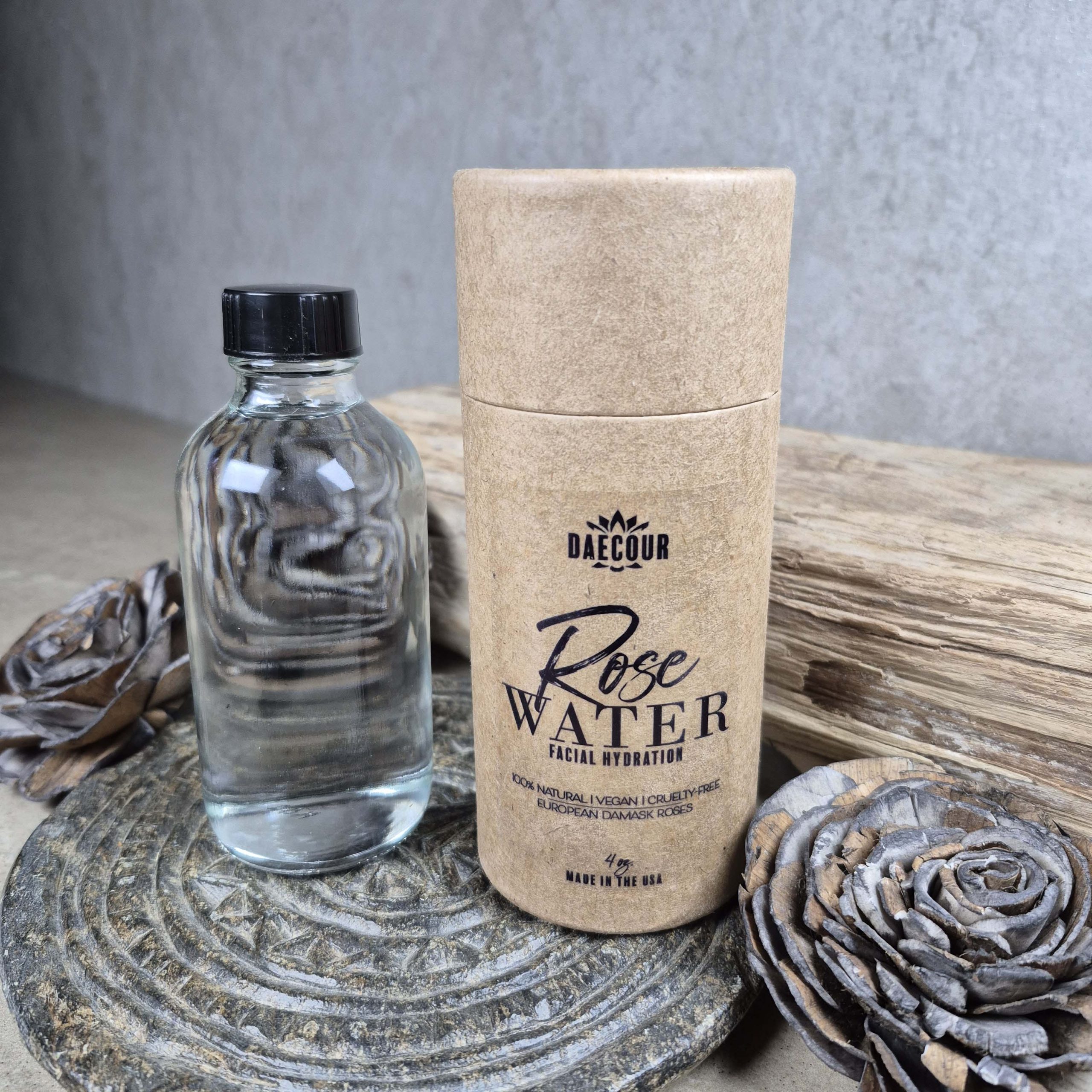

4 Ounce – Glass Bottle with Gift Box
How to Use Rose Water
Rose water is incredibly versatile and can be incorporated into both daily skincare routines and broader self-care rituals.
As a facial mist or toner:
Apply rose water directly to the skin using a spray bottle or cotton pad. It can be used morning and evening after cleansing to refresh the complexion, prep the skin for serums or moisturizers, or revive skin throughout the day. Its gentle nature makes it suitable for all skin types, including dry, oily, and sensitive skin.
As a soothing skin refresher:
Rose water can be applied after sun exposure, shaving, or cleansing to help calm the skin and provide a cooling, hydrating effect. Many people enjoy keeping it refrigerated for an extra refreshing sensation.
As a makeup setting or revitalizing spray:
Lightly mist over makeup to reduce powdery residue and give the skin a natural, dewy appearance.
Mixing Rose Water with Face Mask Clays
One of the most loved uses of rose water is as a liquid base for face mask clays. Instead of mixing clay masks with plain water, rose water enhances both the experience and the benefits.
How to use with clays:
Add rose water gradually to powdered clays—such as kaolin, bentonite, or rose clay—until a smooth, spreadable paste forms. Apply evenly to the face, avoiding the eye area, and allow the mask to partially dry before rinsing.
Why use rose water instead of water:
Rose water adds hydration and botanical support to clay masks, helping to prevent excessive dryness while promoting a balanced feel on the skin. It also adds a naturally calming aroma, transforming a simple mask into a spa-like ritual.
This combination is especially popular in wellness routines focused on mindful self-care, where both physical and sensory benefits matter.
Additional Wellness Properties & Uses
Beyond skincare, rose water has long been valued across cultures for its holistic wellness properties.
Aromatherapy & emotional well-being:
The soft floral aroma of rose water is often associated with calm, comfort, and emotional balance. Lightly misting rose water in a room, on linens, or during quiet moments can support relaxation and mindfulness practices.
Gentle daily ritual use:
Rose water is frequently incorporated into self-care routines such as morning grounding rituals, evening wind-down practices, or meditation spaces due to its subtle yet uplifting scent.
Multi-purpose household use:
Some people enjoy using rose water as a natural refresher for towels, yoga mats, or personal spaces, adding a sense of cleanliness and serenity without synthetic fragrances.
How Rose Water Is Made
Rose water is traditionally made through a steam distillation process using fresh rose petals, most commonly from highly aromatic varieties such as Damask or Centifolia roses. The petals are carefully harvested—often early in the morning when their natural oils are most concentrated—and placed into a distillation vessel with pure water.
As the water is gently heated, steam rises through the petals, capturing their natural essential oils, floral compounds, and plant nutrients. This steam is then cooled and condensed back into liquid form. The resulting hydrosol is rose water: a delicate, water-based extract infused with the essence of roses. Unlike synthetic fragrances or alcohol-based toners, authentic rose water retains the plant’s natural properties without harsh additives, making it suitable for daily use on even sensitive skin.
High-quality rose water is typically clear, lightly floral, and refreshing rather than overpowering, reflecting its purity and traditional preparation.
A Timeless Botanical for Modern Self-Care
Rose water has been cherished for centuries and continues to be a staple in modern wellness because of its simplicity, versatility, and gentle effectiveness. Whether used as a daily facial mist, blended into clay masks, or incorporated into calming rituals, rose water offers a beautiful balance of function and indulgence—making it an essential element in holistic self-care routines.
Related products